Camino de Santiago – Day 10 from Portomarin to Palas del Rei

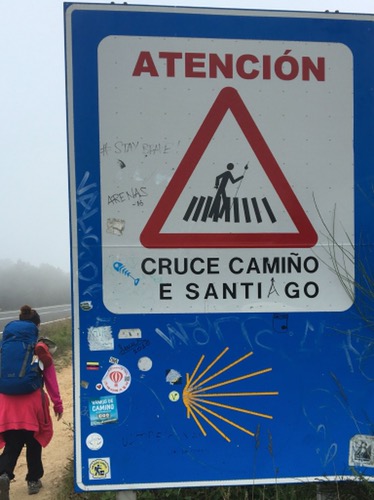
Giorno #10 sul camino, 24km da Portomarin a Palas del Rei. La giornata è molto nebbiosa, la nebbia ci accompagna per tutta la mattinata, fino alle 13:00 rendendo il cammino più difficile è monotono non potendo vedere il paesaggio sicuramente bellissimo come negli ultimi giorni. L’atmosfera degli ultimi due giorni è molto mistica a causa della nebbia, la sensazione di solitudine e l’essere soli con se stessi a meditare è ormai un’azione automatica. Il sole finalmente spazza via la nebbia per ora di pranzo, proprio quando ci fermiamo a 9km dalla fine della tappa presso un ristorante vicino a Gùntin dove veniamo serviti da una cameriera con un modo molto strano di attirare l’attenzione gridando il numero degli ordini con un tono di voce molto acuto. Penso che sia diventata l’attrazione principale dei pellegrini su questa tappa del cammino. Mangiamo un buonissimo bocadillo de jamon e una tarta de queso che ci danno la carica per continuare gli ultimi 9 km fino a palas del rei. Il paese non ha molto da offrirci in termini di attrazioni turistiche, quindi decidiamo di preparare una cena fai da te tra amici in ostello, in in atmosfera molto familiare.

——–

Day # 10 on the camino, 24km from Portomarin to Palas del Rei. The Day is very misty, fog accompanies us throughout the morning, until 13:00 making the journey more difficult and monotonous since we can not see the scenery around us. The atmosphere is very mystical, it feels like be alone having only the possibility to meditate while walking, having become now an automatic action. The sun finally brings the light in our journey as we stop for lunch at 9km away from the end of the stage at a restaurant in the area of Guntín. We are served by a waitress with a very strange way of calling orders shouting the table number with a very acute voice tone. She for sure has become the attraction of the pelegrinos. We eat a delicious bocadillo de jamon and a tarta de queso that gives us the charge to continue the last 9 km up to palas del rei. The town does not have much to offer in terms of tourist attractions, so we decided to prepare a home made meal among friends in the hostel, enhancing our familiar atmosphere.
Camino de Santiago – Day 9 from Sarria to Portomarin

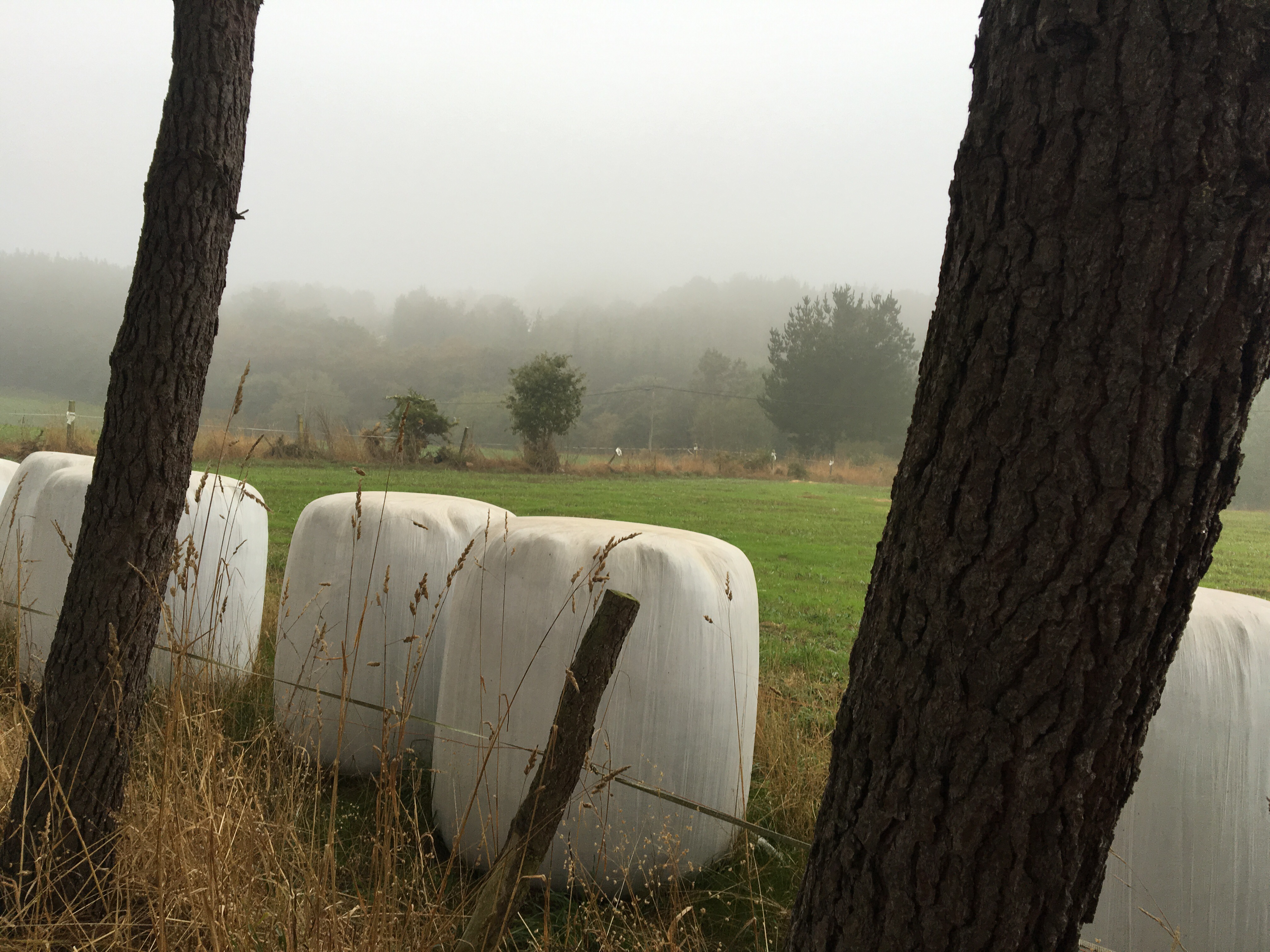
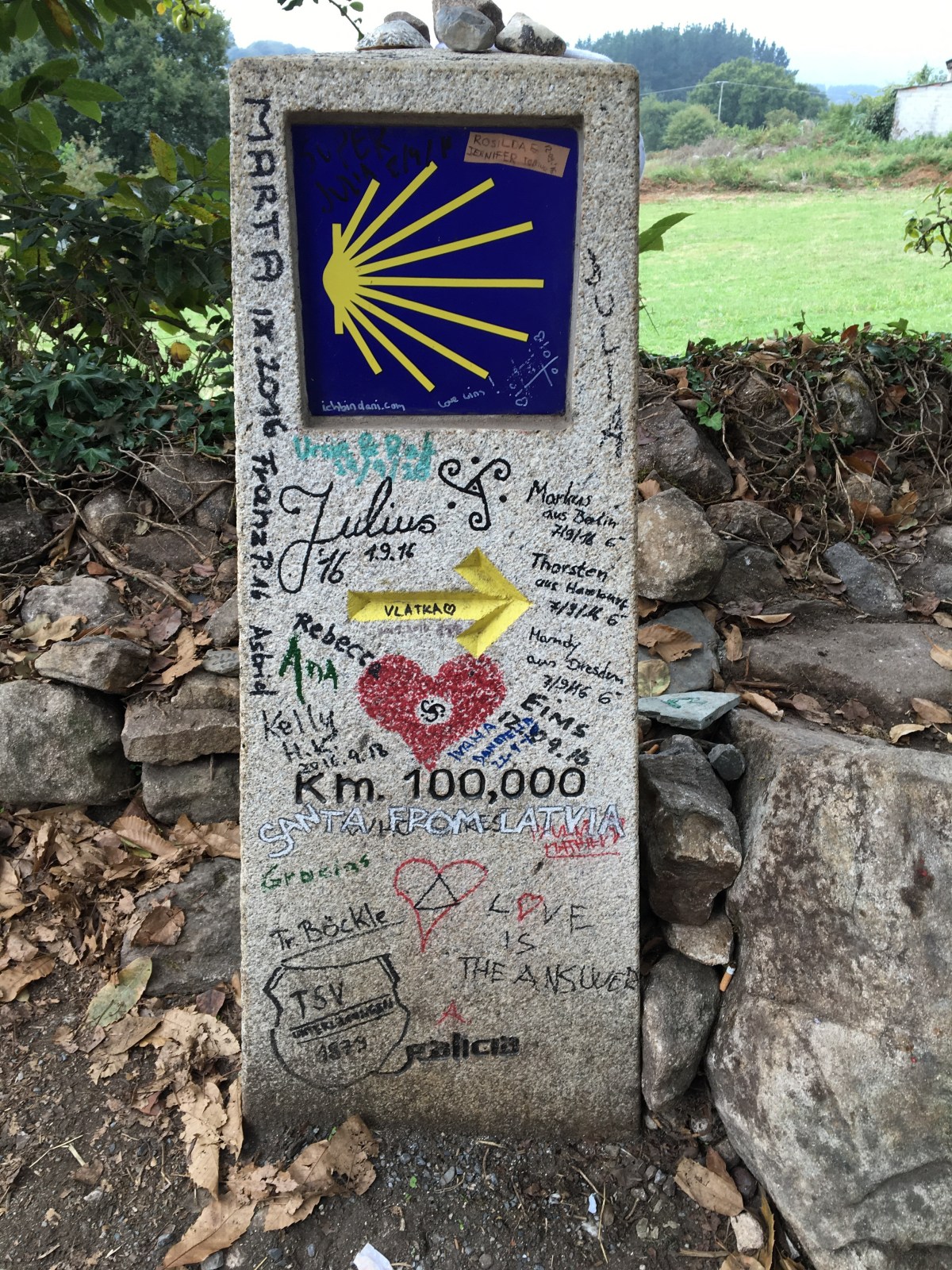
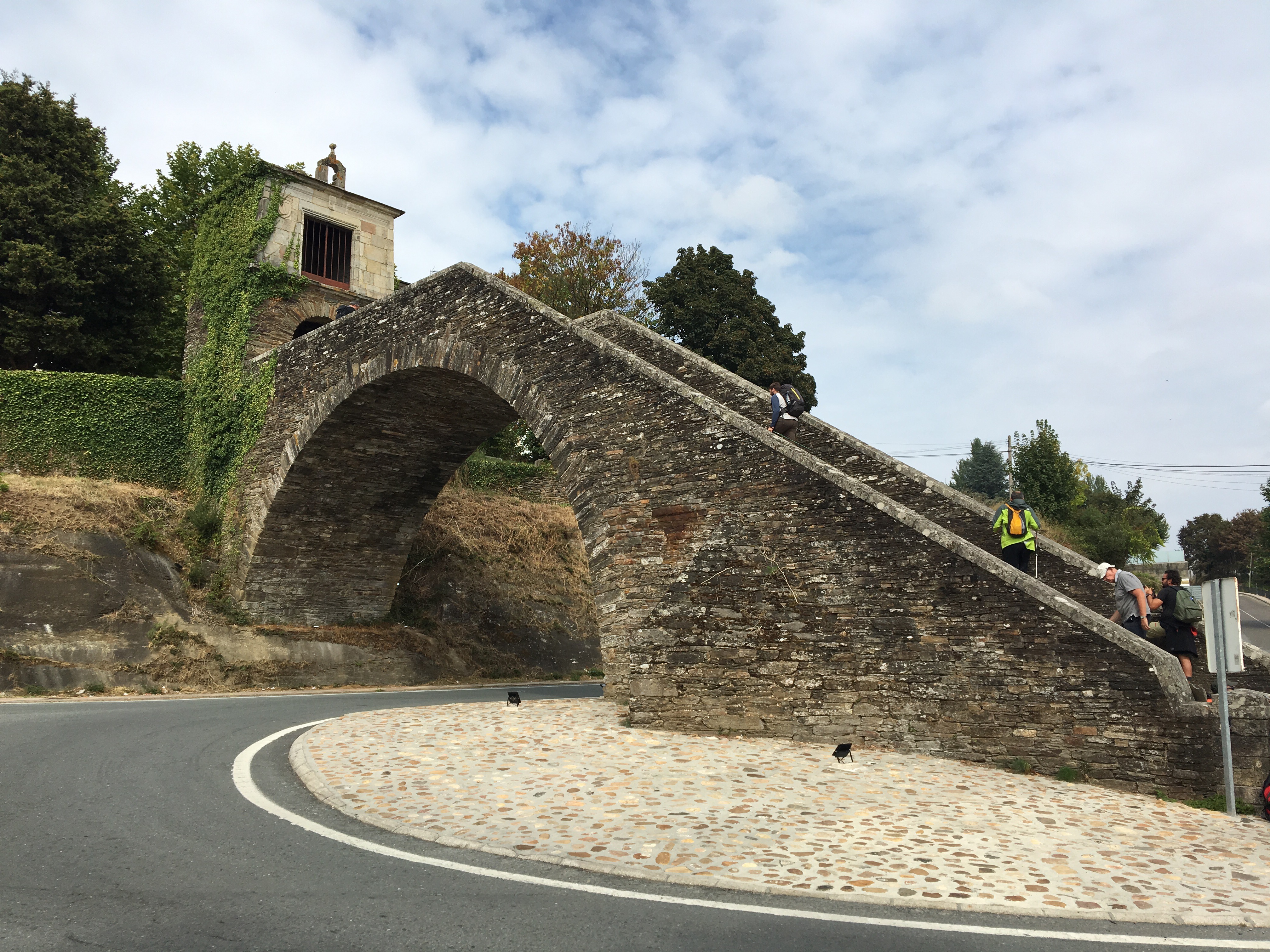
Giorno #9 del camino. La tappa non è delle più pesanti, tra brevi salite e discese e gentili abitanti che mettono a disposizione dei pellegrini frutta acqua e vino di casa in cambio di una piccola offerta. E poi la pietra miliare dei 100km da Santiago; noi ne abbiamo visto due, chissà qual’è quella reale. Quello che è reale sono certamente le frittelle offerte da una gentile signora di una campana nelle vicinanze. Lungo il tragitto ci siamo imbattuti diverse volte in greggi di pecore, capre e soprattutto grosse mucche con cui non ci si scontra tutti i giorni per strada. La meta del nostro viaggio è Portomarin un paese dalla storia molto interessante, originariamente costruito accanto al ponte romano sul fiume Mino, abbattuto e ricostruito nel medioevo per poi essere completamente sommerso negli anni 60 a causa della costruzione della diga di Balesar. I monumenti più importanti, come la chiesa e la porta di accesso sono stati smontati e numerati mattone per mattone per poi essere ricostruiti sulle pendici del monte adiacente alla diga, se si guarda la facciata della chiesa è ancora possibile riconoscere i numeri scolpiti sulle pietre per permetterne la ricostruzione. L’accesso al paese è anche uno tra i più pittoreschi del cammino, prima di tutto si deve attraversare un angusto tratto in discesa molto pericoloso e scivoloso, si passa sul nuovo ponte che attraversa la diga a decine di metri altezza (perfetto per chi soffre di vertigini)e si sale un ponte a scalinata che sovrasta una moderna rotonda stradale (anziché un fiume) per entrare i paese dalla porta di accesso. Il paesino non è dei più belli, risalente al 1963, ma la sua storia ne vale la pena per visitarlo. Il nostro gruppo di viaggio, si è diviso a causa di qualche problema di tendinite di alcuni di noi che hanno preferito avere un giorno intero di riposo, ma è stata una bella sorpresa incontrare Francisco una delle persone che abbiamo incontrato al nostro primo pernottamento e poi perso per qualche giorno sul cammino. Animo! Santiago è a meno di 5 giorni di cammino.

——-

Stage#9 of the camino. This stage is not very heavy, including short climbs and descents and gentle people who provide the pilgrims fruit water and wine of the house in exchange for a small donation. Aldo the milestone of 100km distance from Santiago is part of today photoalbum, we have seen two of This molestones…who knows what the real one is? What we will certainly remember are the delicious pancakes offered by a lady of a house in the vicinity of the way. Along the way we came across several times in flocks of sheep, goats and especially big cows to make our path more exciting. Target of our trip is Portomarin a town of interesting history, originally built next to the Roman bridge over the River Mino, demolished and rebuilt in the Middle Ages until it was completely submerged in the 60s due to the construction of the Balesar dam. The most important monuments, such as the church, the entrance to the city were removed and numbered brick by brick and then rebuilt on the slopes of the mountain adjacent to the dam, if one looks at the facade of the church is still possible to recognize the numbers carved on the stones to allow the reconstruction. The access to the town is one of the most picturesque you will meet on the way, first of all you have to cross a narrow stretch in very dangerous and slippery descent, you pass on the new bridge across the dam at tens of meters of height (perfect for those who suffer of heights) and climb stairs of a bridge overlooking a modern road roundabout. The village is not the most beautiful, but its history it’s worth a visit. Our travel group was split today due to some tendinitis problem of some of us who like to have a day of rest, but it was a nice surprise to meet Francisco one of the people we met on our first night and then lost for a few days on the path. Animo! Santiago is less than 5 days of walking.

Camino de Santiago – Day 8 from Fonfria to Sarria

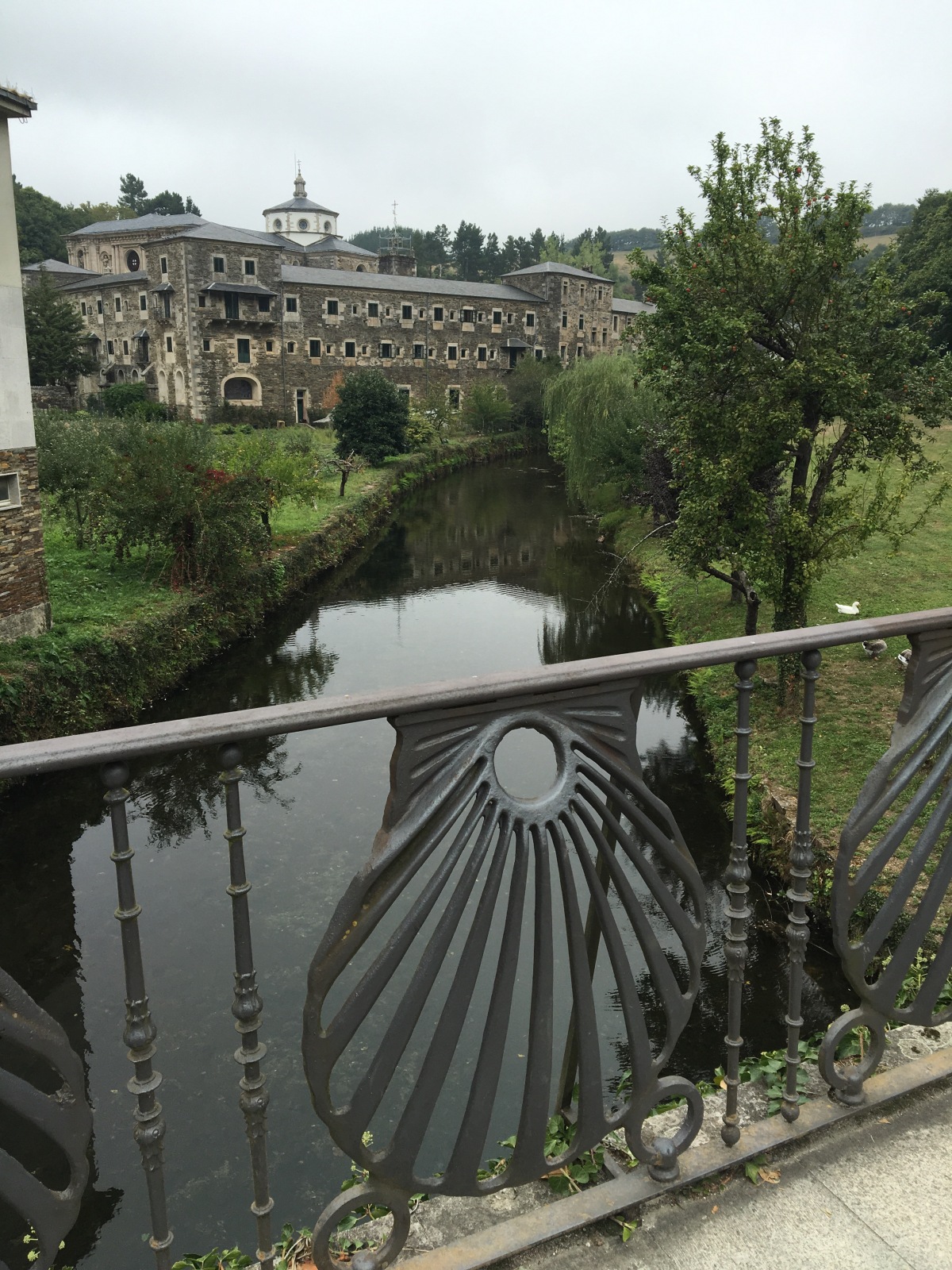
Day #8 del cammino da Fonfria a Sarria, passando per il paese di Samos e il suo bellissimo monastero incastonato tra le colline di campagna. È una giornata di nebbia che rende l’atmosfera quasi mistica come camminare in un sogno tra sentieri dispersi nella vegetazione e piccoli borghi di pastori con i cani a guardia delle case. A quanto pare la zona è popolata da qualche orso, quindi è sempre buono che qualche cane sia pronto a fare la guardia. Facciamo poche soste per poter raggiungere prima Samos per ora di pranzo e poi proseguire per Sarria,durante il viaggio mangiamo qualche mela da un albero che sporge sui sentieri e le more che ormai sono presenti dappertutto sul cammino. Siamo stati del tutto rapiti dalla bellezza del Monastero di Samos, se non fosse per quegli affreschi degli anni 50 fatti al primo piano del chiostro…

La sera arriviamo a Sarria, il posto da cui la maggior parte dei pellegrini inizia il suo cammino, siamo a circa 100km da Santiago, ed è proprio 100km la distanza media da coprire a piedi per ricevere il riconoscimento della Compostela una volta arrivati a Santiago. Abbiamo ormai superato più della metà del nostro cammino.

——

Stage # 8 of the camino from Fonfria to Sarria, passing through the village of Samos and its beautiful monastery nestled between the hills of the countryside. It is a foggy day which makes the atmosfere quite mystical like walking into a dream of trails scattered in the vegetation and small villages of shepherds with dogs guarding the houses. Apparently the area is populated by a few bears, so it is always good that a dog is ready to stand guard. We make a few stops to be able to reach Samos for lunch time and then continue to Sarria. We eat apples from a tree sticking out on the trails and blackberries which are now present everywhere on the road. We were totally overwhelmed by the beauty of the monastery of Samos, of it wouldn’t be for the frescoes of the 50’s put on the first floor of the cloister …In the evening we arrive in Sarria, the place from which the majority of the pilgrims began her journey, we are at about 100 km from Santiago, and it is 100km the minimum distance to cover on foot to receive the recognition of Compostela once you are in Santiago. Half of the Camino is over.

Camino de Santiago – Day 7 from la Herreria to Fonfria

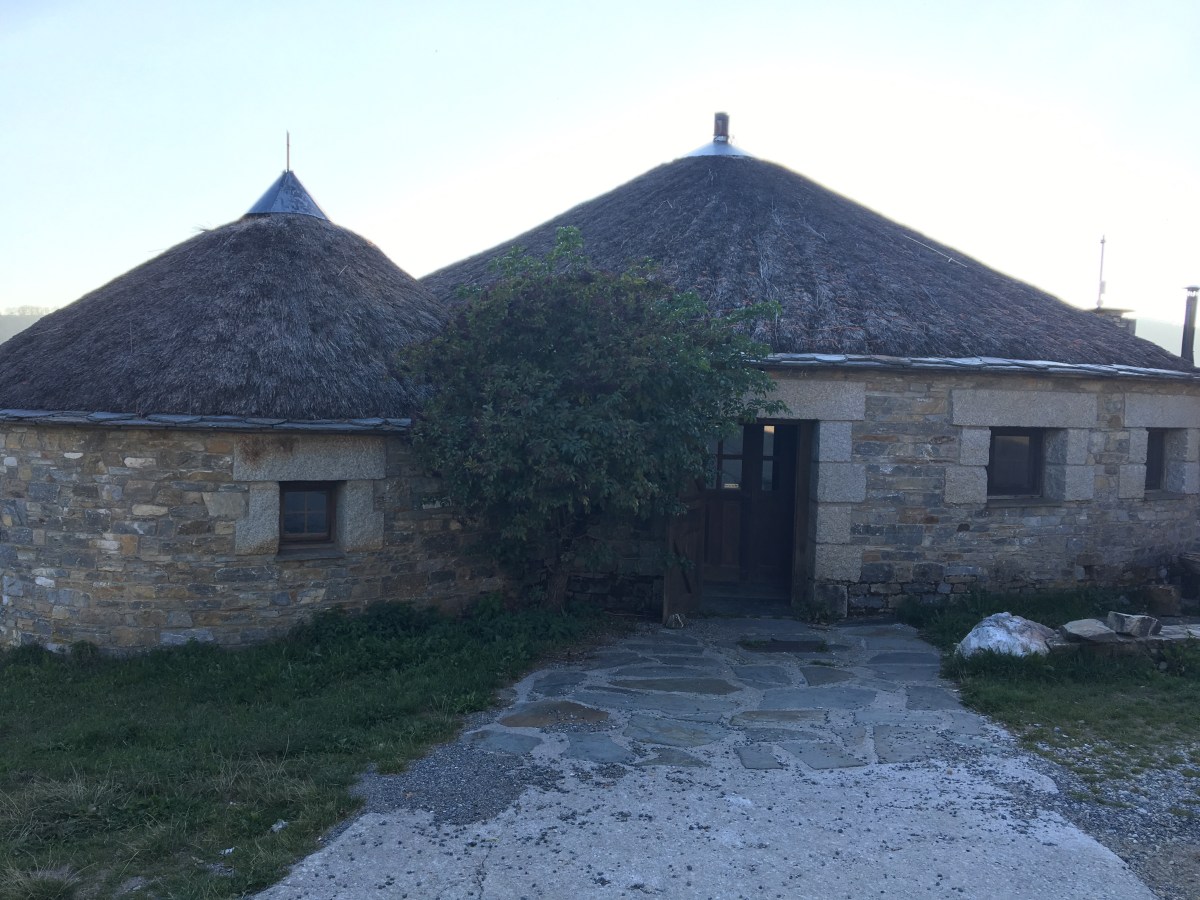
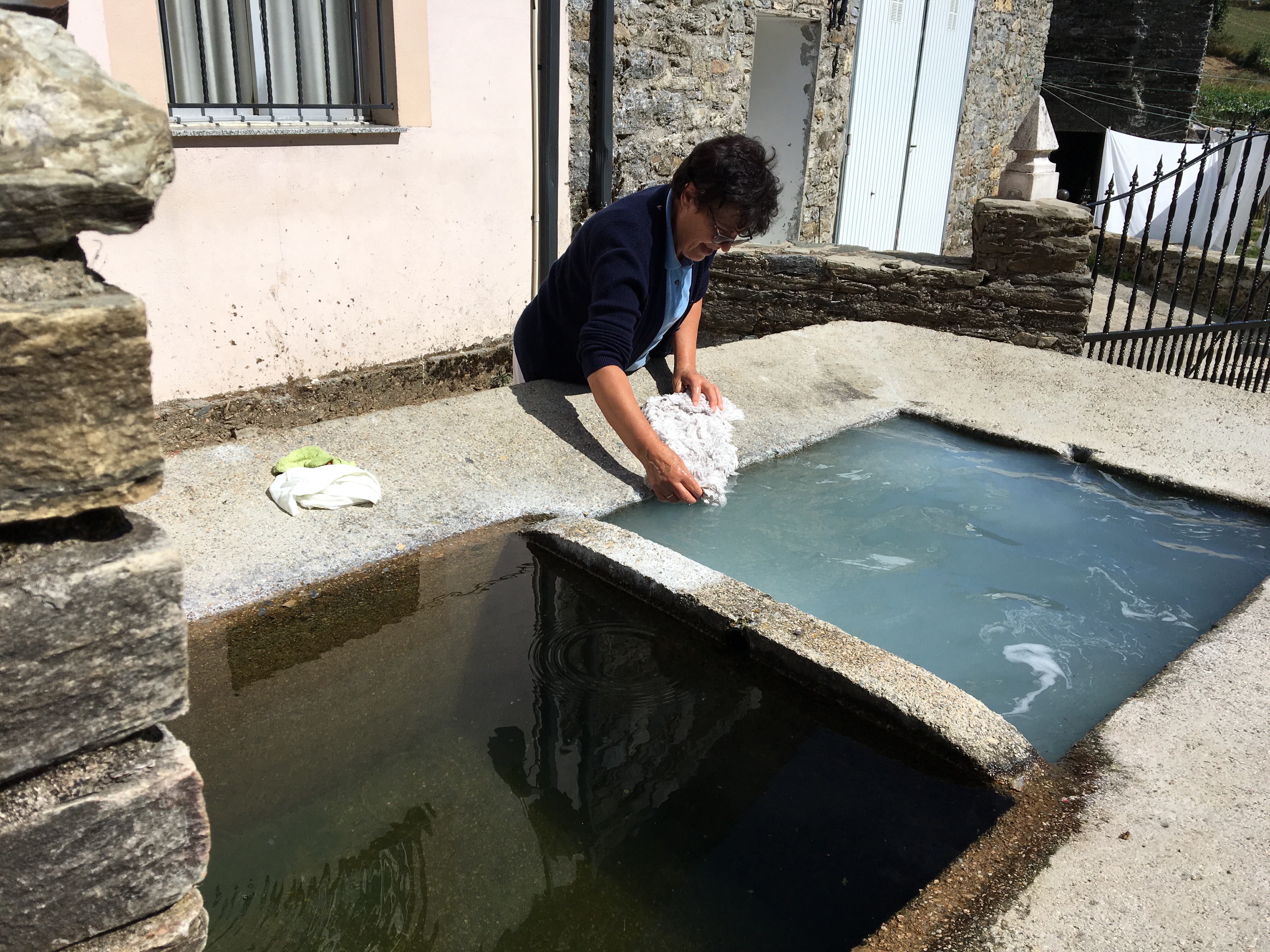
Giorno #7 da la Herreria a Fonfria. Sembra che la parte più difficile del cammino sia giunta al termine, dopo la salita ripida per raggiungere la cima della montagna a o Cebreiro ed entrare in Galizia. Soprannominerei questa come la tappa delle galline e le mucche, perchè se ne incontrano tante lungo i sentieri attraversando piccole masserie e aziende agricole. Come capitato nelle precedenti tappe, anche qui facciamo un salto nel passato fermandoci ad una fontana per rifrescarci dal Caldo degli ultimi km, mentre una signora stava lavando i panni all’aperto nell’acqua della fontana. Qui la tecnologia non sembra indispensable a prova che si puo vivere bene anche senza. Completiamo la nostra tappa all’Albergue Reboleira, ricavato all’interno di una delle vecchie abitazioni della galizia , con i tetti circolari ricoperti di rametti di legno al posto delle tegole. Mangiamo il miglior Caldo Gallego fino ad ora assaggiato e uno spezzatino di vitello al quale nessuno sa resistere. Tutto esclusivamento preparato con ingredienti del luogo coltivati e allevati a non più di 500m di distanza. Finiamo la serata al suono della chitarra di Francis che ci ridà la carica per continuare il nostri cammino domattina.

——

Stage # 7 from the Herreria to Fonfria. It seems that the most difficult part of the journey has come to an end, after the steep climb to the top of the mountain at o Cebreiro trepassing the border to Galicia. This is the stage of the hens and cows, since we met a kit of the in our trip of today walking through small farms. As happened in the previous stages, here ad well we take a step back in time stopping at a fountain to refresh ourselves from the heat of the day, meeting a woman washing clothes at the fountain. Here the technology is not essential and it is easy to prove that you can live well without it. Our trip ends  at th Albergue Reboleira, housed in one of the old galician houses with circular roofs covered with wooden sticks instead of tiles. The Caldo Gallego eat the best so far and a stew to which no Stage # 7 from the Herreria to Fonfria. It seems that the most difficult part of the journey has come to an end, after the steep climb to the top of the mountain or in Cebreiro and get into Galicia. soprannominerei this as the stage of the hens and cows, because they meet so many long insentieri through small farms and farms. As happened in the previous stages, here we take a step back in time stopping at a fountain for rifrescarci in which a woman was washing clothes. Here the technology is not essential to prove that you can live well without it. We conpletiamo our destination all’albergue Reboleira, housed in one of the old houses of the place with circular roofs covered with wooden sticks instead of tiles.The Caldo Gallego of the Pelegrino Menu is the best so far and a stewed meat is something no one can resist. All absolutely prepared with local ingredients grown and picked no more than 500m away from the Albergue. We end the evening with the sound of the guitar played by Francis who gives us some relaxing moment to prepare the walk of tomorrow 

Sicily – Good Friday Procession – Pietraperzia “Lu Signuri di li fasci”

Easter is the event not to be missed for those who want to enjoy the folklore and the traditional religious rites of Sicily, especially during the processions of Good Friday in the inland villages.
A Pietraperzia, in the province of Enna, is organized the procession of “Lu Signuri di li Fasci”.

Easter is the event not to be missed for those who want to enjoy the folklore and the traditional religious rites of Sicily, especially during the processions of Good Friday in the inland villages.

A Pietraperzia, in the province of Enna, is organized the procession of “Lu Signuri di li Fasci”.
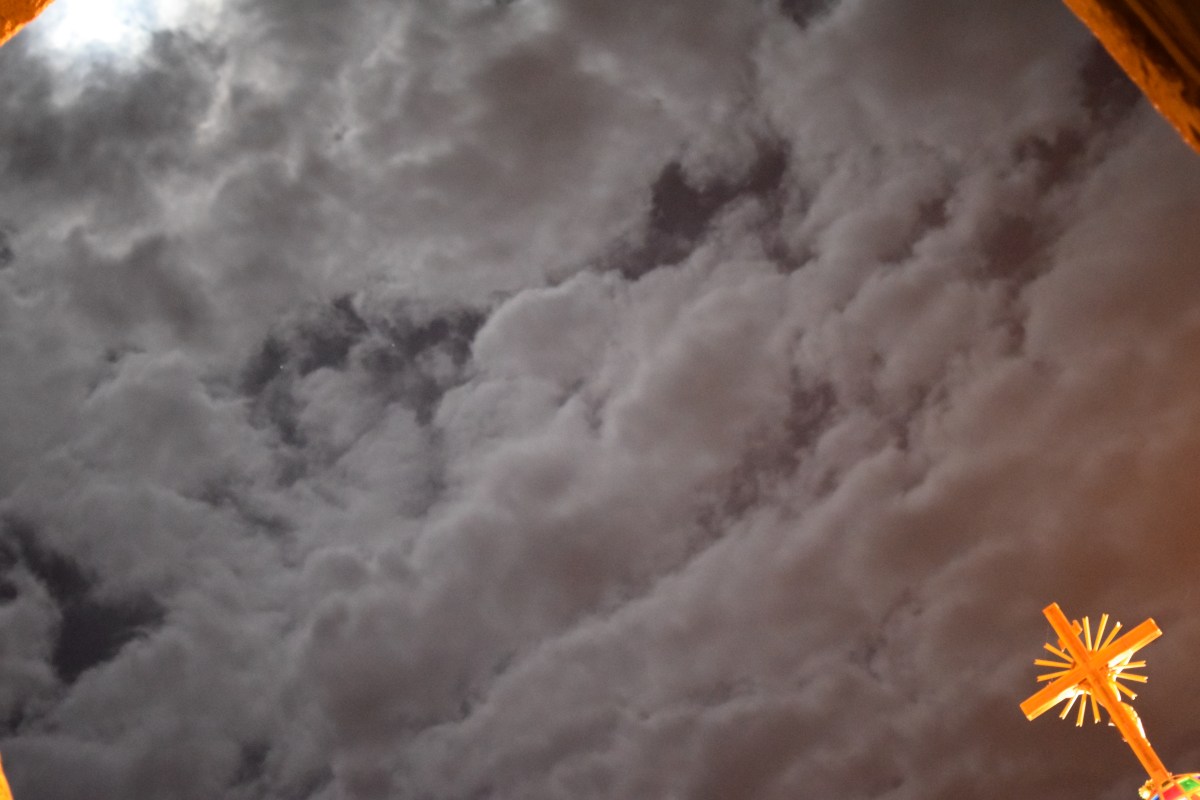
The fercolo composed of a cypress wood beam, ending with the 8-meter-high cross is brought outside of the Carmelite church at sunset and left horizontally in the open space in front of the church itself to allow the faithful to knot at its end lots of white linen cloth bands.
Each band represents a vow made by the person who holds it. The function of the bands is also to allow the faithful to maintain balance in the long wooden rod along the career path that crosses the country.
This very impressive procession starts shortly after 20:00 and lasts about 3 or 4 hours. and it is accompanied by the launches of the dead Christ and Our Lady of Sorrows carried on the shoulders of a group of women. The grueling procession, but full of emotion, ends at about two in the morning.
It’s really worth visiting this small town to immerse themselves in one of the oldest Easter rites of Sicily.

ITALIANO

Pasqua è l’appuntamento da non perdere per chi vuole assaporare il folclore e i riti religiosi più tipici della Sicilia, soprattutto durante le processioni del Venerdì Santo nei paesi dell’entroterra.
A Pietraperzia, in provincia di Enna, viene organizzata la processione de “Lu Signuri di li Fasci”.
Il fercolo composto da untrave di legno di cipresso, terminante con la croce ad 8 metri di altezza viene portato all’esterno della chiesa del Carmine verso il tramonto del sole e lasciata in posizione orizzontale nello spiazzale antistante la chiesa stessa per permettere ai fedeli di annodare alla sua estremità tantissime fasce di tela di lino bianche.
Ogni fascia rappresenta un voto fatto dalla persona che la tiene. La funzione delle fasce è anche quella di consentire ai fedeli di mantenere in equilibrio la lunga asta di legno lungo il percorso professionale che attraversa tutto il paese.
Questa processione molto suggestiva inizia poco dopo le 20:00 e dura all’incirca 3 o 4 ore. ed è accompagnata dalla vara del cristo morto e della Madonna addolorata portata a spalla da un gruppo di donne. La processione estenuante, ma ricca di emozioni, termina verso le ore due di notte.
Vale veramente la pena visitare questo piccolo centro per calarsi in uno dei riti Pasquali più antichi della Sicilia.