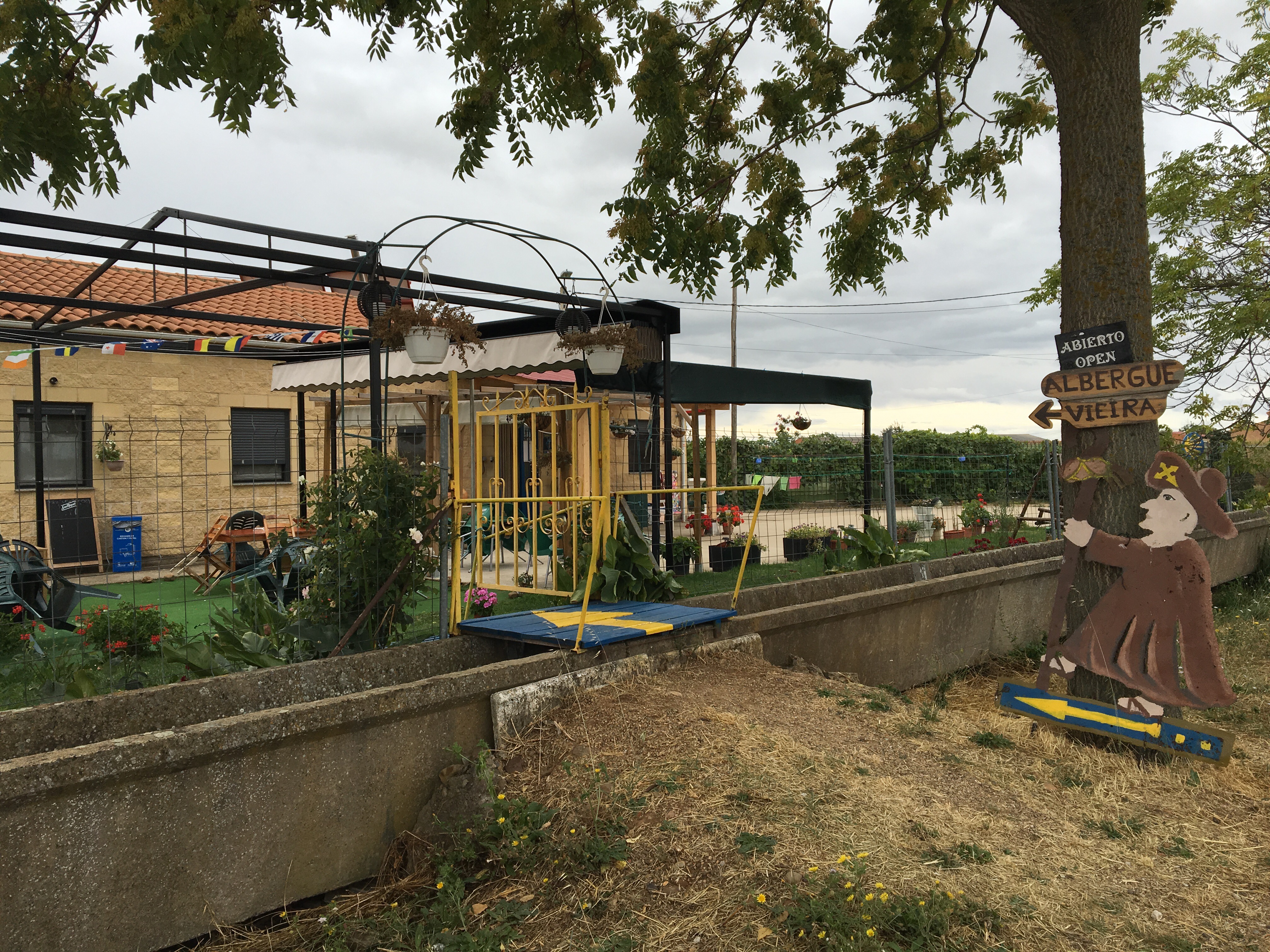
The first stage of our journey began in Leon and ended in San Martin del Camino after 26km ride close to a busy street and a few fields of corn and sunflowers. The cloudy weather makes us go more quickly than we hoped. Altre 7 hours we arrived at the Albergue Vieira, a little paradise run by very nice people who offer us a lunch of pumpkin soup grown in the kitchen garden and the inevitable red wine of the house. And We got to know other “caminadores” who starter from the Pireneis and are already on the way for 15 days, and who has left his town in France and is in its 46th day walk. New faces and experiences with a unique feature: HAPPINESS
——
la prima tappa del nostro cammino è iniziata a Leon e finita a San Martin del Camino dopo 26km di tragitto accanto ad una strada affollata e qualche campo di granoturco e girasoli. Il tempo nuvoloso ci fa andare piú veloci di quanto speravamo. dopo 7 ore arriviamo all’Albergue Vieira, un piccolo paradiso gestito da persone molto gentili che ci offrono un pranzo a base di zuppa di zucca coltivata nel proprio orto e l’immancabile vino rosso di casa. E si fanno le prima conoscenze con chi è già sul cammino da 15 giorni, e chi é partito dal suo paese in Francia ed è al suo 46esimo giorno di cammino. Nuovi volti ed esperienze con un unica caratteristica: la felicità.
Easter is the event not to be missed for those who want to enjoy the folklore and the traditional religious rites of Sicily, especially during the processions of Good Friday in the inland villages.
A Pietraperzia, in the province of Enna, is organized the procession of “Lu Signuri di li Fasci”.
Easter is the event not to be missed for those who want to enjoy the folklore and the traditional religious rites of Sicily, especially during the processions of Good Friday in the inland villages.
A Pietraperzia, in the province of Enna, is organized the procession of “Lu Signuri di li Fasci”.
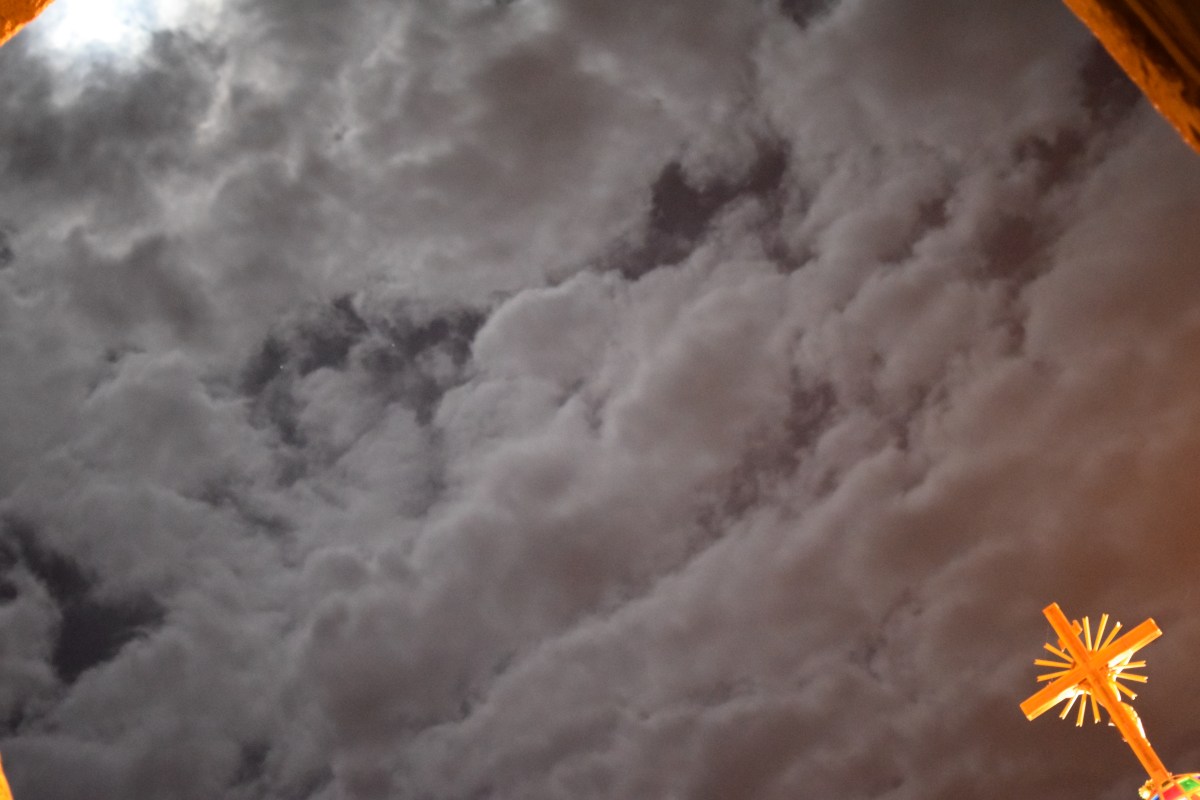
The fercolo composed of a cypress wood beam, ending with the 8-meter-high cross is brought outside of the Carmelite church at sunset and left horizontally in the open space in front of the church itself to allow the faithful to knot at its end lots of white linen cloth bands.
Each band represents a vow made by the person who holds it. The function of the bands is also to allow the faithful to maintain balance in the long wooden rod along the career path that crosses the country.
This very impressive procession starts shortly after 20:00 and lasts about 3 or 4 hours. and it is accompanied by the launches of the dead Christ and Our Lady of Sorrows carried on the shoulders of a group of women. The grueling procession, but full of emotion, ends at about two in the morning.
It’s really worth visiting this small town to immerse themselves in one of the oldest Easter rites of Sicily.
ITALIANO
Pasqua è l’appuntamento da non perdere per chi vuole assaporare il folclore e i riti religiosi più tipici della Sicilia, soprattutto durante le processioni del Venerdì Santo nei paesi dell’entroterra.
A Pietraperzia, in provincia di Enna, viene organizzata la processione de “Lu Signuri di li Fasci”.
Il fercolo composto da una trave di legno di cipresso, terminante con la croce ad 8 metri di altezza viene portato all’esterno della chiesa del Carmine verso il tramonto del sole e lasciata in posizione orizzontale nello spiazzale antistante la chiesa stessa per permettere ai fedeli di annodare alla sua estremità tantissime fasce di tela di lino bianche.
Ogni fascia rappresenta un voto fatto dalla persona che la tiene. La funzione delle fasce è anche quella di consentire ai fedeli di mantenere in equilibrio la lunga asta di legno lungo il percorso professionale che attraversa tutto il paese.
Questa processione molto suggestiva inizia poco dopo le 20:00 e dura all’incirca 3 o 4 ore. ed è accompagnata dalla vara del cristo morto e della Madonna addolorata portata a spalla da un gruppo di donne. La processione estenuante, ma ricca di emozioni, termina verso le ore due di notte.
Vale veramente la pena visitare questo piccolo centro per calarsi in uno dei riti Pasquali più antichi della Sicilia.
Despite of the cool temperature, Helsinki hides a lot of surprises, from stunning nature, to delicious scandinavian food. Discover with us this wonderful scandinavian capital.
The best time to visit the Finnish capital is certainly the Summer. Despite the warmer temperatures, however, never forget to bring some heavier sweater. The average temperature in July is between 20 and 22 degrees.
First of all get in peace with yourself and the language, because to a foreigner it seems that everything is written by typing random letters on the keyboard.
Discover Helsinki is very manageable by walking, especially in areas of the city center and public transport it is working fine. Taxis are very popular and of high quality with drivers who speak English well and payment possible by credit card.
Start your tour with a good coffee or cocktail on the Esplanade Park, first stop is the “Cafe Strindberg”, which offers an exclusive and very relaxing atmosphere, to be enjoyed in front of a good glass of sweet coffee or a cocktail of the house (we tried the Basil & Ginger, very good and refreshing).
If the weather is rainy and cold, Helsinki offers among the largest shopping centers in Europe, with bars, restaurants and shops that can entertain the shoppers for an entire day. One of these is the “Forum”, that towards the late afternoon, especially on weekends, is full of people who come together in the bars (try the “Apollo“) to start their evening before continuing in one of the clubs or theaters of the city.
Continue visiting the neo-classical cathedral placed on top of a grand staircase on Senate Square. Inside you will find the statues of Agricola, the father of Finnish literature, first person to translate the Bible into Finnish, and Luther. Once finished your visit to the cathedral, head to the dock right by the market square “Kauppatori“, facing the beautiful turquoise palace of the Swedish Embassy and jump on one of the many ferries that offer the sightseing around the bay of Helsinki and all its islands, including Suomenlinna the most famous one, once a military fortress that still it collects proof of the military history the Finns are proud of. Curiosity: in the Shipyard of Helsinki is produced 60% of all ice breaker vesselss in the world.
After the boat trip, if you are cold and you want to enjoy a nice bite, stop by the street food truck “Scandinavia Food Restaurant“, usually right in front of the pier for boat tours and try the fried fish, anchovies, squid, crab, shrimp and herring onion, accompanied by a delicious garlic sauce.
While enjoying these delicacies, beware of seagulls on the harbor of the market place, they could snatch away from your hands what you are about to eat and would not be a pleasant experience.
The Finns are among the biggest coffee drinkers in the world, so you won’t be disappointed wherever you will have one.
On the same square, stop for a coffee at “Cafe Jugend”, a Jungend Styl Cafee, preserving a fresco of a stylized Helsinki and antique cruises advertisments, which also offers live music.
If weather conditions are on your side, do not wait to go out on the streets and discover the city in its every corner. Helsinki will surprise you.
Heading from the port towards the center of Etelaesplanadi you will find a building in Art Nuveau style, which hosts the restaurant Kappeli, a good and fancy place to enjoy good Finnish food, a salmon dish or an elk meat hamburger “Hunter’s Open Sandwich “. If you fancy a beer you will not be spoiled choosing the Bar “Villi Wäinö“, we just wish the whole menu on the board was written in English.
Dedicate a good part of one of your days to visit Helsiki’s museums, especially the KIASMA, contemporary art museum featuring a building with a metal roof full of curved lines. Contains one of the most eclectic collections of modern Finnish and international art. The museum and its surroundings are always populated by hundreds of inhabitants of Helsinki, who takes ii sun on the lawns and flower beds of those who relaxes under the statue of Mannheim.
Once in Finland do not miss the chance to take a sauna in Helsinki, in Finland there are more than one million and Finnish are extremely proud of their Saunas. There are saunas in restaurants and bars and even more saunas than cars. The Finns like to spend time in silence at these high temperatures, also known for being not the best in small talk, they are always open to explain their customs and traditions and spend time with tourists.
Try this experience to Kulttuurisauna (Hakaniemenranta 17) to have a real Zen experience.
A local classic architecture, with a magnificent service. You are greeted at the entrance waiting for your table by a friendly gentleman who in a very formal way will take care of your coats before entering the room. The typical Finnish food is really excellent. Helsinki is for sure a place where you will eat really well. Try the Finnish Appetizer with smoked meat of elk and the baltic herring, cheese and onion sauce and then move on to the meat main dishes: elk filet, chicken breast Russian art and lamb livers.
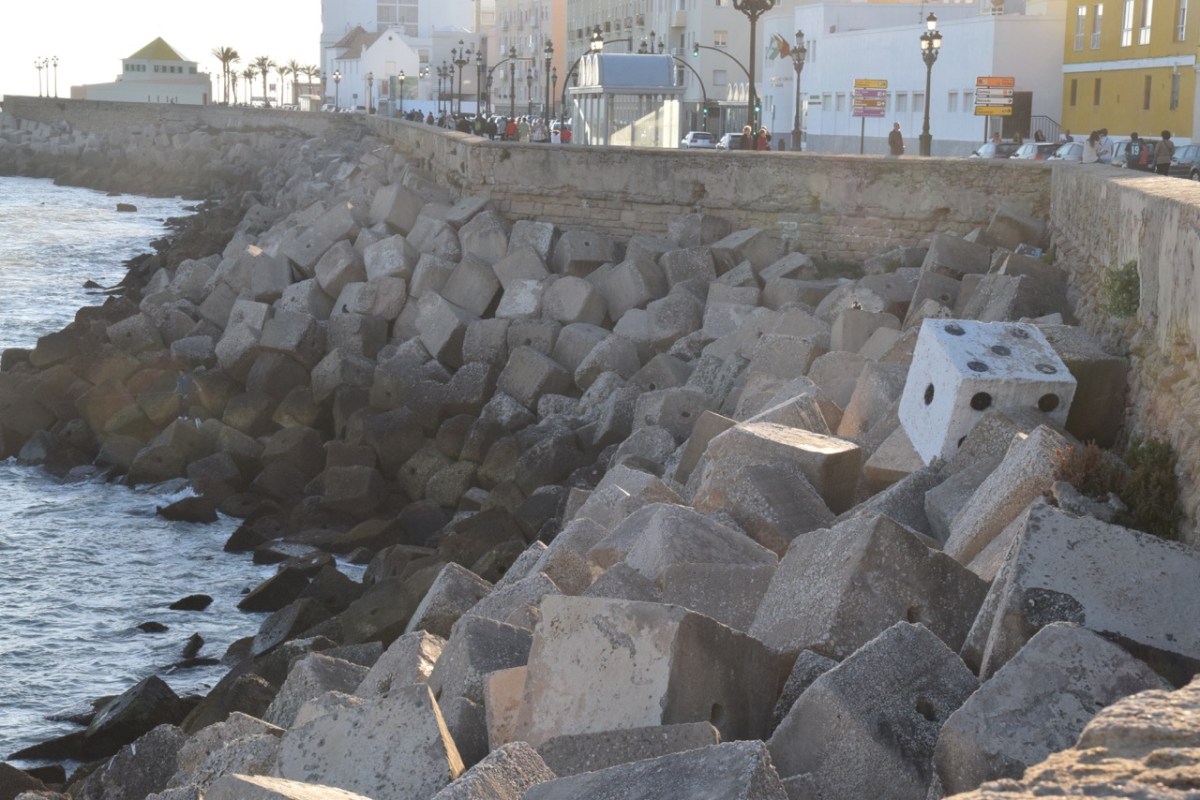
Built on a peninsula that extends along the Atlantic coast, battered by the waves that make it perfect for those who love water sports, surfing, windsurfing and kite. A quiet and relaxing place in the year to enjoy soaking in the history of sailors and conquerors. More active and vibrant in the summer.
Built on a peninsula that extends along the Atlantic coast, battered by the waves that make it perfect for those who love water sports, surfing, windsurfing and kite. A quiet and relaxing place in the year to enjoy soaking in the history of sailors and conquerors. More active and vibrant in the summer.
The city stretches for several kilometers along the Avenida de Andalucia where are located the majority of modern hotels with all amenities at a 5-minute walk from the beach.
This part ends at the gates of the old town at the round tip of the peninsula, charcterized by its bastion, the beautiful and impressive cathedral and the countless restaurants and tapas bar around which people gather in the warm evenings ventilated from the Atlantic wind.
Its urban beach The Caletta is famous for being the setting of one of the James Bond film “Die Another Day” with Ale Berry.
Don’t miss the tapas restaurant Casa Manteca at the corner of Calle Calle del Patrocinio and Corralon de los Carrros a must when visiting Cadiz, founded by a famous bullfighter. Try the tapas and cold cuts of meat shrimps and fresh oysters accompanied by a cold beer or a good white wine and finally enjoy one cherry.
One of the oldest and most spectacular Andalusian city, on the top of a plateau divided by a 100m deep gorge called El Tajo. It is located in an area away from the coast once famous for its trade and for attracting in the 19th century many famous people, such as Dumas and Hemingway who have found their inspiration from the its landscape and folklore.
Start to visit from the south, the new town, going to the old part, the Ciudad crossing the spectacular Ponte Nuevo which offers a breathtaking view of El Tajo, surrounded by a row of white houses built over the cliff.
For the braves, the Casa del Rey Moro, in the vicinity of the Ponte Nuevo, has a stair of 300 steps leading down to the bottom of the gorge. Be very careful, the stairs is largely in the dark and very slippery being carved into the rock. Once was used as an escape, or as a way to source the water to the city as well as point to attack the city.
To the north of the new bridge you will find the Plaza de Espana in the neighborhood of Mercadillo, famous for one of the novels written by Hemingway on the Spanish fascist period.
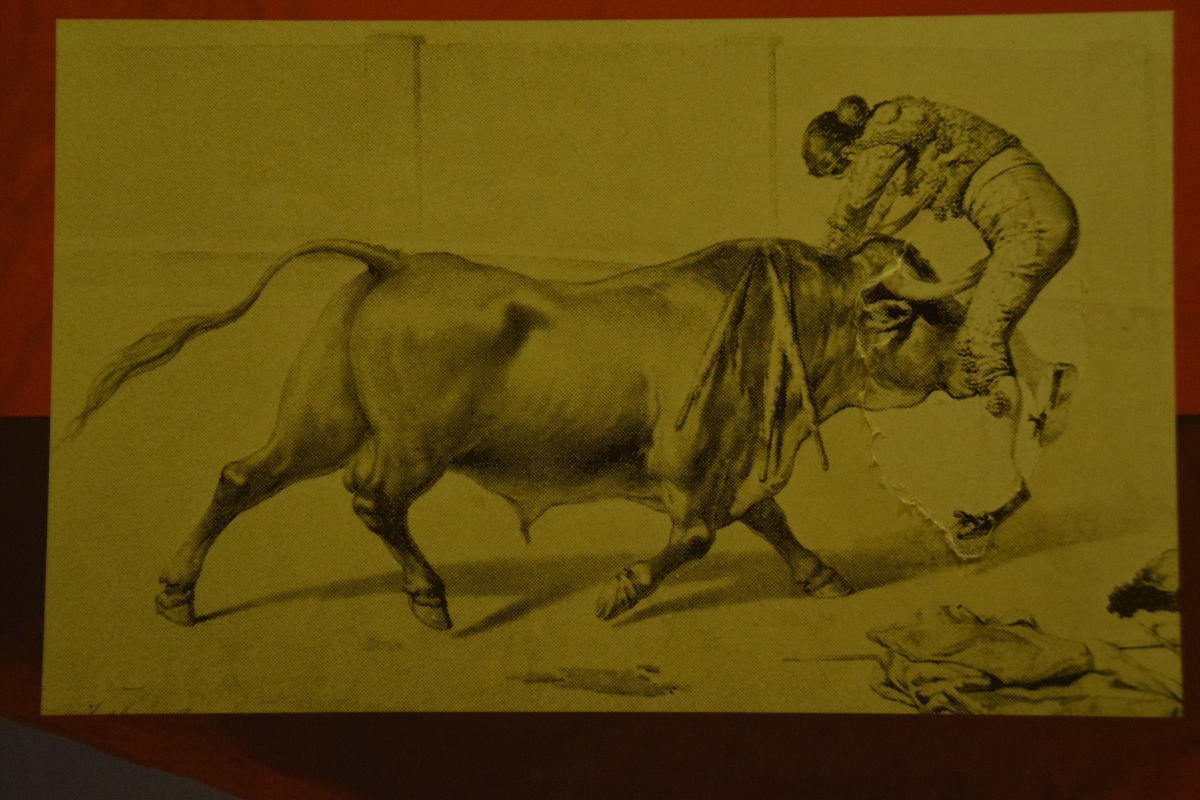
Continue north to the real attraction of Ronda and whole Andalusia, for the nostalgic but also for the curious of bullfighting and its history. The Arena of Plaza deToros still used after 200 years, is characterized by the intense yellow of its sand and hand-painted wooden balustrades that surround the 5000 seats. inside the Arena is the museum Taurino, a dip in the history of bullfighting. There you can learn more about the legend of bullfighting: Pedro Romero. His clothes are still stained with blood, a little macabre but rich in folklore. The fear and tension of this environment was also the subject of an ‘other work of Hemingway “Death at noon.”
Leaving the Plaza de Toros and still continuing to the north, relax and enjoy the wonderful scenery and the tranquility of Alameda del Tajo.
But what is the most interesting thing of Ronda? certainly its inhabitants, mainly gitanos who will welcome you with great familiarity and drag you in pleasant chats about their private lives, marriages, children, grandchildren, festivities, perhaps in front of a cool glass of tinto de verano. You will be enchanted by this fantastic and almost mythological place.
Setenil de las Bodegas
A country dug in the rocky walls of a plateau crossed by the river Rio Trejo
Cave houses complemented by beautiful white facades on the narrow streets. Terraces and natural shelters built into the rock and tunnel whose walls are the white walls of houses and the roof made of a overhanging rock.
Differenently from the other white villages, Setenil is built in Caves. On the border between the province of Cadiz and the province of Malaga, it is reachable from Ronda driving approx. 100km northward. it is s part of the characteric white villages ranging from Setenil to Arcos de la Frontera. In the past is served much to defend the Christian inhabitants of these areas by the Moorish in 1400 and now become attraction for tourists, many of those homes are now restaurants and bars in which you should keep an eye to understand what it was like to live in caves hundreds of years ago. Setenil is a beautiful place to discover on foot through its narrow streets, stopping to savor the great offering of its tapas bars, grilled meat, patatas bravas, followed by ice cold beer to drink in the shade of a cool shelter carved directly in the rock.
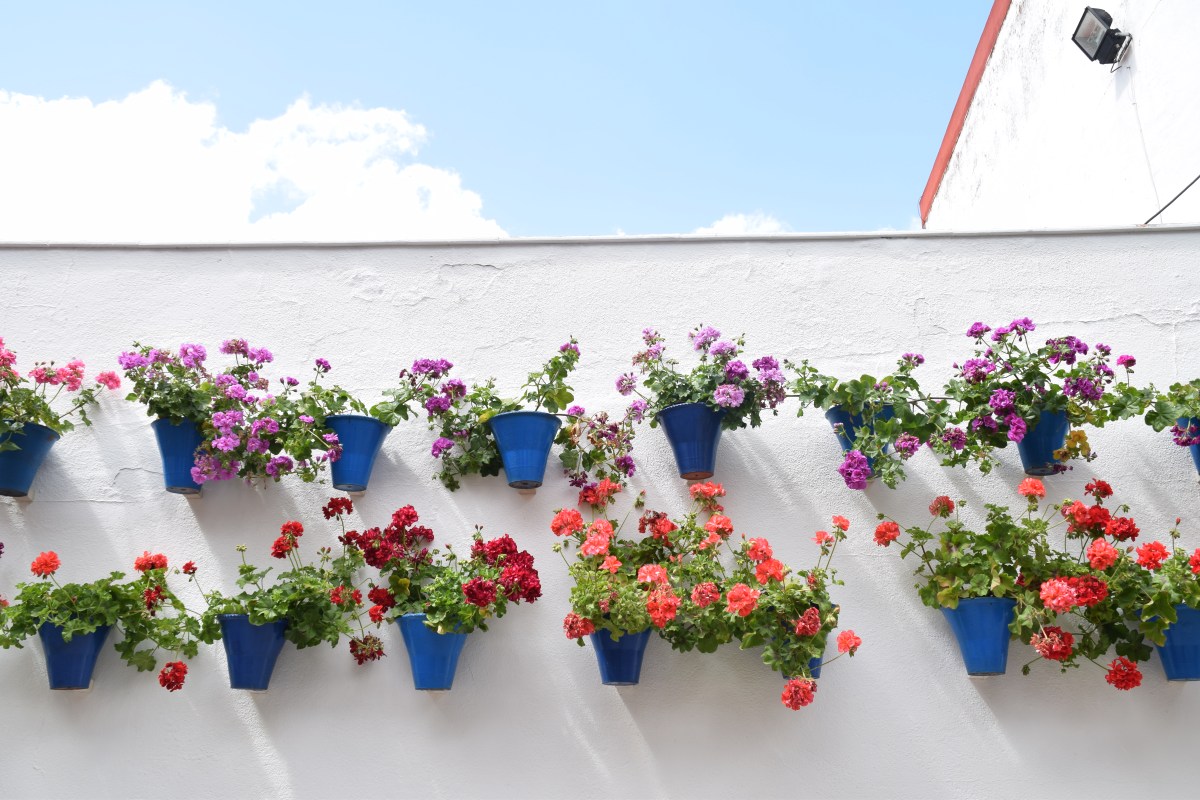
Cordoba is an explosion of colors, of its multicultural tradition and a desire for life that will conquer you. Known for its unique style cathedral: la Mezquita, but also because of its Patios full of vases, flowers and little fountains well kept inside the courtyards of the historical private homes.
Cordoba is an explosion of colors, of its multicultural tradition and a desire for life that will conquer you. Known for its unique style cathedral: la Mezquita, but also because of its Patios full of vases, flowers and little fountains well kept inside the courtyards of the historical private homes.
The colors of Seville dazzle through a game of reflexes that from the shimmering water of the river Guadalquivir go through the narrow streets surrounded by the white painted houses below the blue sky of Andalusia. Walking in this city is a real sensorial experience where scents, images and sounds characterize the discovery of the city, making it a journey through time and life of extraordinary vital people always open and hospitable to foreigners. Seville is a multifaceted beautiful city to be experiences around the clock.
The colors of Seville dazzle through a game of reflexes that from the shimmering water of the river Guadalquivir go through the narrow streets surrounded by the white painted houses below the blue sky of Andalusia. Walking in this city is a real sensorial experience where scents, images and sounds characterize the discovery of the city, making it a journey through time and life of extraordinary vital people always open and hospitable to foreigners. Seville is a multifaceted beautiful city to be experiences around the clock.
Do you want to experience the real atmosphere of Sevilla? then the best way to know the city is to walk and get lost in its streets and squares in the Barrio de Santa Cruz, whose name comes from the iron cross placed in the middle of the characteristic square of Santa Cruz. Between Tapas bar at the corners of whitewash houses and windows surrounded by beautiful plants and flowers, orange trees and typical churches which alternate with the typical houses of Flamenco that now populate the entire city offering shows around the clock.
Flamenco, the man suffering and passion transformed into powerful and exotic music and dance at the same time, powerful expression of what the strong but also tragic Andalusian feeling, from the intimacy of suffering to the happiness of life but also from violence to death.
Goethe wrote about Flamenco: “a physical force that everyone can hear but that no Philosophy can ever understand”.
The shows can be seen in many theaters and Flamenco schools such as the Casa del Flamenco (Ximenes de Engraved 28, Barrio Santa Cruz) but performances are also held in typical bars and concert venues as “La Carboneria” (c. 18 Levies, free entry) a former charcoal factory transformed into a concert hall with a bar attached and a beautiful entrance with a carved fireplace and a piano which possibly someone is already playing while others entertain themselves drinking Tinto de Verano, the Summer Wine ( red wine soda, ice and lemon slices)
From the Barrio de Santa Cruz, after a stop in one of the many authentic tapas place, you can easily reach the Cathedral Square, built in the 13th century with the intent, common for that time, to be a building so large that future generations would have considered their builders crazy.
Located right near the Alcazar, together with this one creates a mixture of Moorish and Gothic Christian style.
Entering the Cathedral you feel bewildered by its size and the beauty of the works of art such those preserved in the Sagrestia de los Calices as the painting of Santas Yusta and Rufin of Goya and various works of Murillo.
Inside the Cathedral is the grave of Christopher Columbus, whose remains were transferred from Havana to Seville in honor of the city from which Columbus departed to the continent that would have been America.
The monumental tomb consists of a coffin supported by four knights whose costumes representing the four great kingdoms of Spain. In reality is not yet known if the real remains are in Seville or Santo Domingo.
A little further away from the city center, in south direction, is the Plaza de Espana, built on the occasion of the Spanish-American exposition in the ‘20s.This is the place where the Sevillian love walking on the weekends between the balusters covered of azuleios and old trees and palm trees that hide the houses of ancient noble families around the Parque de Maria Luisa.
Just outside the park along the river Guadalquivir, is the Tower of Gold, formerly used as a watchtower and as a warehouse for the wares coming from the new colonies of Mexico and Peru. It is said that in times of wealth of the city, the dome of the tower was covered with golden tiles. Down the road heading north on Paseo de Cristobal Colon you reach the Plaza de Toros de la Maestranza real where is one of the most important bullfighting arenas in Spain, as in Ronda also here was introduced bullfight without horses and is a symbol of almost religious importance for lovers of these events.
During Spring, the Semana Santa and Feria de Abril drastically change the atmosphere of the city passing from the sad but typical Holy Week atmosphere to the festive and colorful experience of the feria de Abril.
Just a little curiosity: the old ancient ruins and magnificence of Seville will be the setting of the new series of Game of Thrones.
Tapeando is the verb the Spaniards use to indicate the action to go and eat tapas, small portions of food served as an accompaniment to a beer on a nice glass of wine. Originally consumed as an aperitif and introduction to dinner, it has become in Andalusia the real alternative to dinner, giving a chance to try different flavors and aromas hobnobbing with friends over a glass of Estrella beer.
Order tapas can though be a hard challenge, especially in the most popular bars, where you must make room jostling in the crows to make your order.
Never lose an eye on your toothpicks with which tapas are served, at the time to leave they will be counted to calculate the bill.
Among the specialties of Seville try:
Torta de aceite: focaccia with olives
Huevos a la flamenco: made with morcilla sausage, garlic, onions, tomatoes and a cover of egg
Churros: the deep fried dough that are the best way to end the Sevillian nights out.
Out of the main stream tourism, Lebanon is the perfect mixture of mediterranean and middle east culture, the very link between Europe and Asia. Sitting on top of more than 5000 years of history, where Phoenicians, romans, and arabs have alternate themselves in dominating the country, leaving traces of their impressive culture through the work of arts presents every where along the country.
A country of beauty, culture and astonishing nature where different cultures, religion and philosophies coexists.
Despite the multiple setbacks and political upheavals, Lebanon remains one the friendliest places in the world. The Lebanese like to savor life, are very friendly and can give you the hospitality only a mediterranean/asian culture can give. They make you feel at your ease from the very first moment. They like to enjoy time with friends and family, eating together and talking of philosophy and religion. Very proud of their country, they love to celebrate it at the first chance during small talks with foreigners. For them Lebanon is the earth of the world, the place where they’ve born, where they want to leave, where they come back after long periods abroad to build their house, in the hills outside of the city, surrounded by the marvelous nature of the mountains facing directly the mediterranean sea.
Lebanese people look alway forward in a positive way. Inshallah (as God wishes) is a word you will be used to hear often.
During our travel through Lebanon we were guests of a wonderful Lebanese family. Beirut, Byblos, Tyre and the Chouf Mountains were our main travel destinations, impressing a memory in our mind that will never go away.
Beirut
This is the city that will never die. Here different cultures and religions coexists in the same place. It is impressive to see a mosque and a christian church close to each other, separated by a narrow street, as happens for the mosque of Mohamed Al-Amin and the Christian Maronite Cathedral of St. George.
Beirut gives you always a big welcome.
Don’t let be intimidated by the armed soldiers perched above tanks on many street corners and Dive into the city recent history walking along the green line, for many years the border line between the muslim and the christian neighborhood of the city. Proceeding through the Rue da Damas you will be impressed by the few buildings still in the condition they were left at the end of the war. A strong contrast towards the brand new skyscrapers, as they are still reminding of the city turbulent past.
Still Alive after years of civil war, the city had a very quick development. The central district with new modern buildings and renovated old houses of the Beirut’s Souk is an example of that. But still the presence of crumbling and bullet-riddled houses and villas dated to the ottoman or french mandate period, waiting to be tore down remembers of the recent past of the city. All this reconstruction has unfortunately caused speculation and corruption. Crumbled houses and fields where bought for less money by big construction companies (see Solidere) taking advantage of the situation setting a much higher price for the renovated buildings not any more affordable by the former citizen classes.
This has stolen a lot of the old flavor of Beirut. If you ask any one, you will be answered in the same way that the central district of Beirut is now neat and nice, with wonderful buildings but unfortunately so expensive and unaffordable that they end up empty for long periods making the city center, once very populated, quite a desolated area.
Beirut must be experienced on the street, walking through its streets, eating shawarma and falafel at one of its typical fast food, having dinner in the area of Mar Mikhael and then strolling through the old and the new city, between almost destroied villas and the brand new sky scrapers (the Marina Towers) a few steps away from the Corniche. Walking towards South you will encounter the famous Pigeon rocks, natural rock arches rising from the sea, a piece of wild nature in the middle of the city.
in the downtown don’t miss the old Roman baths
Eating
Lebanese Food
The lebanese food is a celebration of life, fresh flavorful and with a class of its own. Eating a meal is not only substantiation but a get together experience, enjoying this time with relatives and friends. For the lebanese is always the right chance to celebrate some important moment with a reunion around a fully basted table. The colors of the lebanese cuisine reflects the sunny landscapes and the hospitality of the lebanese people. Lebanese food combines the sophistication of European cuisine with the exotic oriental ingredients. A meal usually starts with a “mezze” a selection of salads, hummos, dattles, stuffed grape leaves, kebbe (meat balls), taboule (parsley and tomato salad), Baba ghannouj (eggplant), Rqeqet Jebne (puff pastry with spinach, Fatti (chikpeas, pine nut mixed with tahin and yogurt), Fool (beans, olive oil, garlic, lemon, vegetables, tomato, mint, parsley) . The main course is usually grilled meat, or chicken or fish served with a vast variety of vegetables, rise and bread. A typical dish of the Chuff mountains is the Mloukhieh,chicken meat cooked with mallow leaves The mezze are appetizers that can make a whole meal.
Desserts are very sweet and include a great variation of sweets such as baklava, Knefeh (mild cheese, flour thick, sugar and honey) a real calorie bomb) , mammoul, debs (home made grape cream, sweet as honey), as well as dried fruits and nuts.
Black coffe is always served at the end of the meal, scented with cardamom.
If it happen to be invited at someone house, you will be offered of coffe, cake or fresh cut season fruits.
Street Food
Shauarma, Falafel and the Manakeesh the lebanese pizza expecially with fresh vegetables, fresh baked at every time of the day in on of the bakery along the streets.
Our favourite place:
Barbar
Rue Spears, Hamra
A popular street food chain in Lebanon, oper around the clock, serves the best mannish, shwarma in the city. Falafel are prepared live in front of you, with the cook frying them in the hot oil pan. Don’t bother about what time in the day you get hungry, after this culinary experience you will only be more than satisfied
Drinking
Check point Charlie
Uruguay Street,
For the nostalgic and for them that want to find a connection between two cities that lived a separation between their borders, Beirut as Berlin, both of them connected by a somehow similar story.
Great cocktails and atmosphere. Stop there for a drink before starting your crazy night in the Beirut night life.
Chouf Mountains & Mont Liban
Beitedinne
27 km from Beirut is a spectacular attraction. The palace of Beitedinne is the jewel of the Chouf Mountains, built by BasharII is the greatest surviving architectural achievement of the 19th century. Beitedinne is surrounded by many small villages, all of them worth a visit, like Arsoun and Deir El Ahmar. Just walk through their small streets to get a feeling of the typical daily life of Lebanese families. If you are lucky, you can even get invited for a coffe or a mate tea with a piece of cake or fresh fruits, sitting on a sofa, talking and eating around the typical wood stove present in alle the houses in the chuff mountains, while you hear discussion about philosophy, politics, and more relaxing and funny topics. Most of the people would simply forget about the war and avoid to talk about it at all. Instead they prefer to show their overriding optimism that “everything’s going to be alright” and good times are just around the corner.
Byblos
7000 years old city. Its archeological site has ruins and work of arts from neolithic, canaanite, phoenician, hellenistic, roman and crusader times. It’s a blend of the ancient and the prosperous ages overlooking a beautiful day.
It picturesque harbor on the mediterranean sea gives it’s best at sunset, when the sun colors all the building walls and the stone of an intense orange/red color.
A must see is the Memoir du Temps fossils museum a small shop of a paleontologist that discovered hundreds of fish fossils in a field owned by his family. More than a shop is a real family driven archeological museum.
Byblos is one of the preferred venues of Beirut people to have a night out, to enjoy the night life that it offers with numerous bars and clubs along the old streets of the historical center.
During the Christmas time it becomes a feast of lights especially along the archeological area in the city center.
Tyre
about 80 km south of Beirut, suffered heavily during the civil war and the israeli incursions. The feeling you have in this city is very different that the one you can have in Beirut. It seams like belonging to another country not fully out of the tension of the war. ONU troops are still stationed in the city. Poster and flags of Hezbollah are outlying the access roads to the city. Anyway the city is of course worth a visit for Unesco World Heritage Roman remains like the Al-Bass Archeological site that contains the largest and best preserved Roman hippodrome in the world.
On the westernmost tip of Sicily, facing the aegadian Island, Marsala is a traditional city with a huge history leading to the unification of Italy in the ‘800. History, culture and love for food in Marsala melt in the perfect mix for a deep mediterranean feeling. Characterized by one of the most famous sweet red wines in the world named “Marsala”, after the city. It is worth to visit one of the many family managed wine cellars.
It is said that Woodhouse, after discovering the taste of Marsala wine brought it to UK presenting it as a great product. The British were stunned by the quality of Marsala wine, so that they support his production making it a billionair business, with countless wineries that exported wine in all the world (Woodhouse, Ingham, Florio are among the most famous families producing this wine)
A city that descends from the Carthaginians (formerly called Lilybaeum) occupied by many civilization up to the Arabs, who gave the city the name Mars-Allah:”the harbor of God”. The historical moment for which it is most remembered is the landing of the Thousand led by Garibaldi in Sicily. To this last one were dedicated the names of streets, squares, city access doors but also restaurants, bars and wine cellars.
History, culture and love for the sea and the Mediterranean food are mixed perfectly in the city of Marsala. Walking through the streets of the downtown you will come across restaurants trying the good couscous and the “sformato”, the Marsala typical focaccia with cheese and spinach, all followed by a ricotta cheese filled cannoli accompanied by a glass of dry or amber Marsala. There is nothing better than discovering the city by walking slowly through the downtown streets lined with shops and artists’ workshops of ceramics and majolica (www.ceramicheartistichedipasquale.it). Just around the corner of Porta Garibaldi is the fish market, opened from early in the morning until lunch time where you can buy directly from the hands of the fishermen themselves. The market becomes a nice night life area from 21:00 p.m when the fish shops live place to most shiny and colorful bars and pubs around the fish market fountain.
Visit one of the many wineries in the city, they offer the opportunity to learn something about the art of winemaking and do short tasting courses not only of Marsala but also of other products including the first sort of champagne made in Sicily (www.carusoeminini.it)
A few km away from the city is the beautiful nature reserve of the Stagnone, a lagoon of salty water, characterized by the saline where salt is process before ending up on the tables of all over the world. This place gives its best at sunset making it one of the most relaxing and romantic experience that you can experience but beware of mosquitoes. The red and violet colors of the setting sun reflecting on the water and the windmills operated by countless years, will make it a simply unique experience.
From the landing of the Stagnone it is easy to reach by a small ferry the island of Mozia. Spend here an afternoon immersed in the nature of this natural reserve.
The choice of places to sleep is very wide and suitable for all budgets. For an unforgettable experience stay at Villa Marrone, a bed and breakfast located in a villa from ‘800, restored with great care and taste. The rooms are very comfortable and well equipped and a garden with a swimming pool full of plants of various types will withhold you relaxing in the shade of a tree in the company of the hosts and their friendly pets.
Sulla punta più occidentale di Sicilia, di fronte alle meravigliose isole Egadi. Marsala la città del vino rosso dolce che l’ha resa famosa in tutto il mondo.
Si narra che Woodhouse, dopo aver scoperto la bontà del vino autoprodotto dai marsalesi, lo fece riassaporare agli inglesi, presentandolo come un grande prodotto. Gli Inglesi rimasero sbalorditi dalla bontà del Vino Marsala, finanziandone così la produzione, facendone un business miliardario, con aziende vinicole innumerevoli che nacquero e esportarono vino in tutto il mondo (Woodhouse, Ingham, Florio)
Una città che discende dai Cartaginesi (anticamente chiamata Lilybaeum) e che ha visto diverse dominazioni tra le quali quella Araba da cui è nato anche il suo nome Mars-Allah, il porto di Allah, fino al momento storico per cui è più ricordata sui libri di storia: lo sbarco dei Mille in Sicilia guidati da Garibaldi. Proprio a questo sono stati dedicati i nomi di diversi strade, piazze, porte di accesso alla città ma anche ristoranti, bar e vinerie.
Storia, cultura e amore per il mare e il cibo mediterraneo si mischiano perfettamente nella città di Marsala. Passeggiando per le vie del centro ci si imbatte in ristoranti in cui provare del buon cous cous o lo sformato marsalese con formaggio e spinaci, il tutto seguito da un cannolo alla ricotta accompagnato da un buon bicchiere di Marsala secco o ambrato. Non c’è di meglio che scoprire la città passeggiando lentamente per le vie del centro costellate di negozietti e laboratori di artisti della ceramica e della maiolica (www.ceramicheartistichedipasquale.it). Proprio dietro l’angolo di Porta Garibaldi si trova il caratteristico mercato del pesce in cui si può comprare direttamente dalle mani degli stessi pescatori.
Visitate una delle tante aziende vinicole presenti nella città, tutte offrono la possibilità di imparare qualcosa sull’arte della produzione del vino e di fare dei brevi corsi di degustazione non solo del Marsala ma anche di altri prodotti tra cui i primi champagne di provenienza siciliana (www.carusoeminini.it)
A pochi passi dalla città si trova la meravigliosa riserva naturale dello Stagnone, uno specchio di acqua salata molto bassa, caratterizzata dalle saline da cui si elabora il sale che poi andrà a finire sulle tavole di tutto il mondo. Visitare il posto al tramonto è uno delle esperienze più rilassanti e romantiche che può capitarvi, ma state attenti alle zanzare. I colori rosso e violetto del sole al tramonto che si specchia sull’acqua e sui mulini a vento funzionanti da innumerevoli anni, la rendono semplicemente unica al mondo.
Dall’imbarcadero dello Stagnone è possibile raggiungere con un piccolo traghetto l’isola di Mozia per passare un pomeriggio immersi nella Natura di questa riserva Siciliana.
Marsala offre molti posi in cui passare la notte, tra bar, pub e vinerie, sempre colme di persone locali e turisti soprattutto inglesi e tedeschi.
La scelta dei posti in cui dormire è molto ampia e adatta a tutte le tasche. Per vivere un’esperienza indimenticabile soggiornate a Villa Marrone, un bed and breakfast posto in una villa dell’800 ristrutturata con gran cura e gusto, dalle camere molto accoglienti e ben attrezzate e un giardino con piscina ricco di piante dei più svariati tipi che vi tratterrà a passare le vostre giornate a rilassarvi all’ombra di un albero in compagnia dei padroni di casa e dei loro simpatici animali domestici.
E’ possibile anche organizzare il proprio matrimonio in questo singolare posto, per informazioni: www.whiteweddingmarsala.jimdo.com.





 Foot Ontheway Travel Vlog